In short: Online Quran classes are one-on-one video lessons with a qualified teacher, taken from home on your phone, tablet, or laptop. They work for children, adults, reverts, and Hifz students. Sessions are typically 30 or 60 minutes, two to five times a week, and prices in the UK start around £30 per month. This guide explains how they work, who they’re for, what you’ll learn, how to choose a teacher, and what it costs — so you can make a confident decision before booking your first lesson.
Online Quran learning has quietly become one of the largest forms of Islamic education in the world. Families across the UK, North America, Europe, Australia and the Gulf now teach their children to recite, memorise, and understand the Quran without ever leaving the house — and they’re getting better results than many local in-person options. The reason is straightforward: a child in Birmingham can now learn directly from an Al-Azhar graduate in Cairo, at a time their parents choose, with reporting after every session.
This guide is written for anyone considering online Quran classes for the first time — whether for yourself, your child, or your whole family. It does not promise miracles, it does not push a particular product, and it doesn’t pretend the digital classroom is perfect. It gives you what you need to make a confident decision: what these classes actually are, who they suit, what to look for in a teacher, what to budget, and how to start.
If you only have two minutes, jump to the How to Choose the Right Teacher section. If you have ten minutes, read the whole guide — you’ll save yourself weeks of trial and error.
What Are Online Quran Classes?
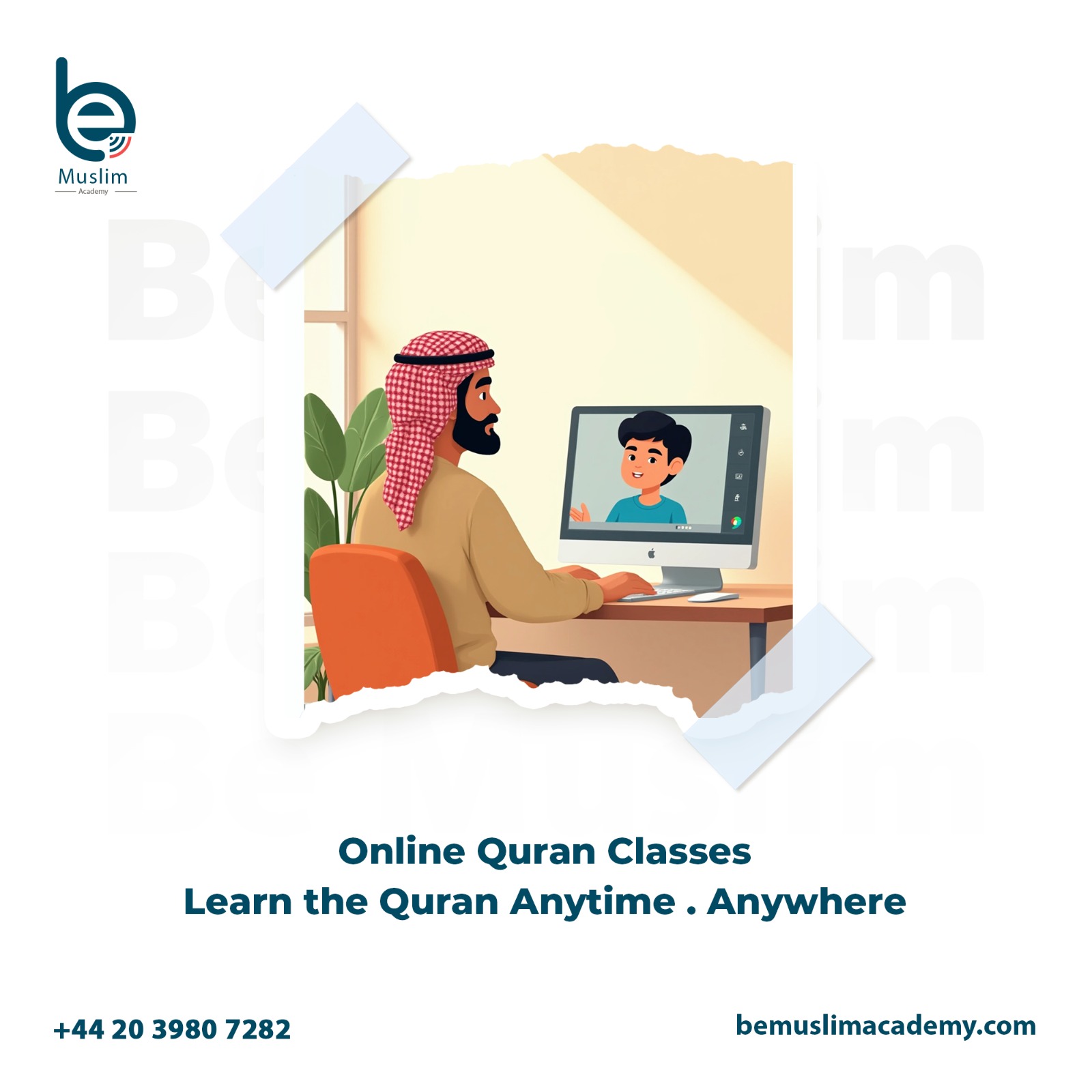
An online Quran class is a private, live video lesson between a student and a qualified Quran teacher. The teacher logs in from their location (usually Egypt, Saudi Arabia, Jordan, or Pakistan), the student logs in from home, and the lesson runs in real time — typically over Zoom, Skype, Google Meet, or a built-in academy portal.
A typical lesson lasts 30 or 60 minutes. The teacher shares their screen with the Mushaf (the Quran), points to each ayah using the cursor, listens to the student recite, and corrects pronunciation in real time. Modern teachers also use a digital whiteboard for Tajweed rules and Arabic letters, voice notes between lessons, and sometimes recordings the student can replay.
It’s important to understand what online Quran classes are not.
They are not pre-recorded video courses, where you watch a teacher you can never speak to. They are not chat-based or text-based learning. They are not apps where you tap through lessons on your own. Apps and recordings have their place, but they cannot replace a live teacher who hears your recitation and corrects you the moment you slip on a letter. The Quran was transmitted from teacher to student face-to-face for fourteen centuries. Online classes preserve that direct teacher-to-student relationship — they simply use a webcam instead of a shared cushion.
Who Are Online Quran Classes For?
The honest answer is: almost everyone. But the experience changes dramatically depending on who the student is. Here’s who benefits most.
Children (ages 4 to 15)
Children are the largest group of online Quran students worldwide. A good online class for kids is short (often 30 minutes), interactive, uses visual reinforcement, and rewards consistency. Most children start with Noorani Qaida (the foundation book that teaches Arabic letters and pronunciation rules), move to reading the Quran with Tajweed, and then optionally enter a memorisation track. Parents can sit in for the first few sessions to help the child feel comfortable.
Adult beginners and reverts
If you’re an adult who never learned to read Arabic — or a revert who became Muslim later in life — online Quran classes are often the best option available to you. You can learn at your own pace, without the embarrassment many adults feel when sitting alongside young children at a local mosque. A good teacher will start exactly where you are, whether that’s the very first letter of the Arabic alphabet or polishing the surahs you already know.
Women learning from female teachers
This is one of the most under-discussed benefits of online learning. For Muslim women and teenage girls, finding a qualified female Quran teacher locally can be difficult. Online classes solve this completely. You can be matched with an Al-Azhar certified female teacher and study comfortably from home, in a private one-on-one setting, in clothing you feel relaxed in.
Hifz (memorisation) students
Memorising the entire Quran is a major commitment, but it’s entirely possible online. A Hifz teacher will set daily memorisation goals (usually half a page to one page), revise older lessons regularly, and track your progress sabaq by sabaq. Children doing Hifz online often progress as fast as those in a traditional in-person halaqa, with the advantage that they can continue their regular school education in parallel.
Adults polishing their Tajweed
If you can already read the Quran but want to recite beautifully and correctly — with proper Makharij, Ghunna, Idgham, and Madd — a good Tajweed teacher will rebuild the foundation in a few months. This is the most common request from adults who learned to read as children but never received formal Tajweed training.
Families learning together
Many academies offer sibling discounts and shared schedules. A whole family can study at staggered times, often back-to-back, with the same teacher or different ones depending on each member’s level. This builds shared vocabulary and shared progress around the dinner table.
What You Can Learn in Online Quran Classes
A good academy doesn’t only teach you to read. It offers a full curriculum that takes a student from the Arabic alphabet all the way to advanced Quranic studies. The following are the main tracks you’ll find.
Noorani Qaida
The starting point for almost every student. Noorani Qaida is a structured primer that teaches the Arabic alphabet, vowel marks (harakat), connecting letters into words, and basic Tajweed rules. A student typically completes Noorani Qaida in two to four months, depending on age and pace, before moving on to reading the Quran itself.
Quran Reading (Nazira)
Also called Nazira, this is the stage where students read the Quran directly from the Mushaf with the teacher correcting pronunciation along the way. Most students complete a full read of the Quran (a khatm) in twelve to twenty-four months of consistent weekly classes.
Tajweed
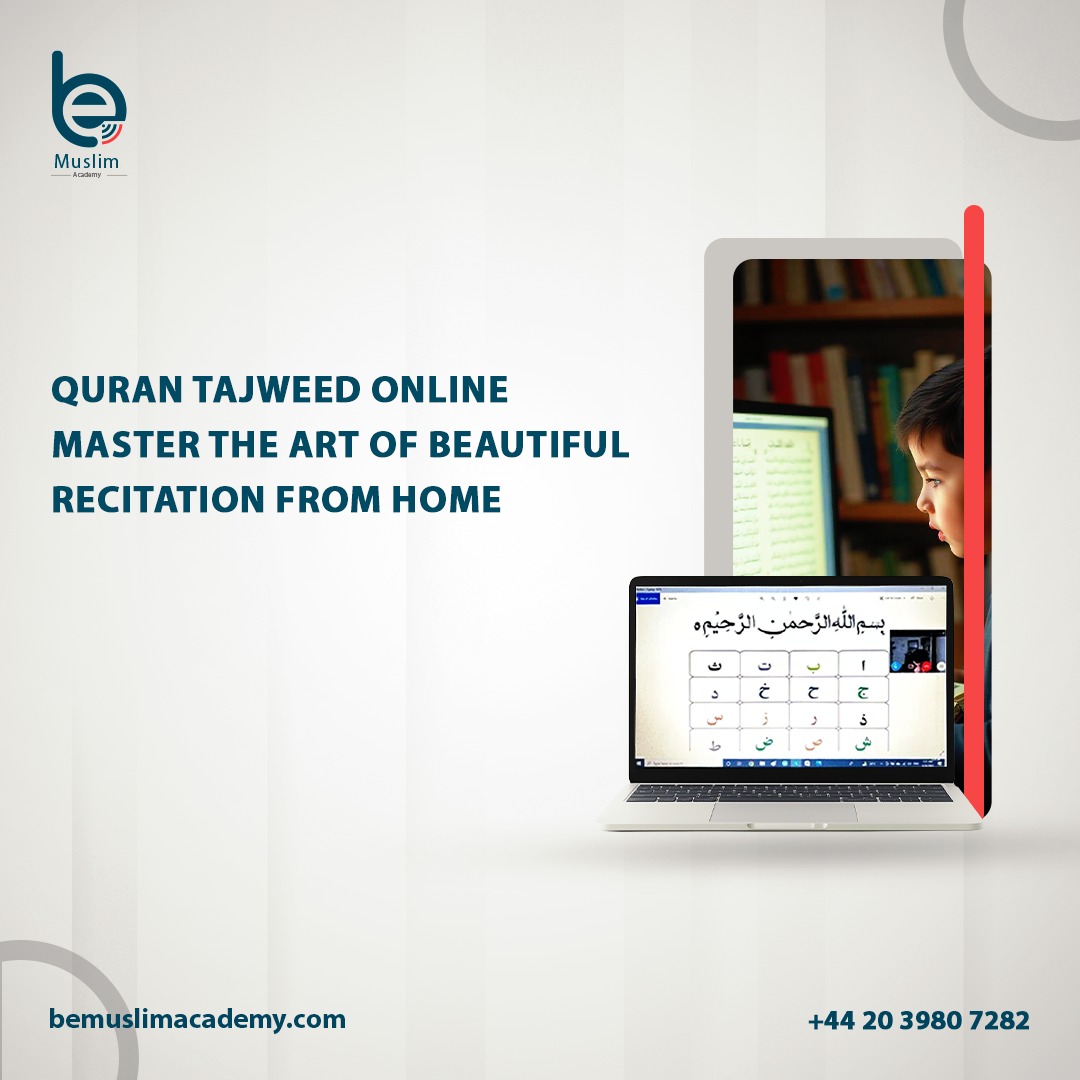
The science of beautiful and correct recitation. Tajweed covers the rules of pronunciation (Makharij al-Huruf), the rules of stretching letters (Madd), nasal sounds (Ghunna), how to merge letters (Idgham), how to hide letters (Ikhfa), and when to stop (Waqf). For a comprehensive treatment of these rules, see our companion guide on Quran Tajweed online.
Hifz (Memorisation)
The track for students aiming to memorise the entire Quran. A good Hifz teacher will combine new memorisation (sabaq), recent review (sabqi), and older revision (manzil) in every lesson. Children typically complete Hifz in three to five years; adults can do it in two to four with full dedication. Read more in our parents’ guide to Quran memorisation for kids.
Arabic Language
Reading the Quran is different from understanding the Quran. Arabic language classes teach classical Arabic grammar (Nahw and Sarf), vocabulary, and reading skills — so students can eventually understand what they recite. Many UK families enrol their children in Arabic language classes alongside Quran lessons to build both skills together.
Tafseer
The study of Quranic interpretation. Tafseer classes go through the Quran ayah by ayah, explaining context, meaning, and lessons. This is usually a later stage for students who can already read fluently and have a basic grasp of Arabic.
Ijazah
The traditional certification that authorises a student to teach the Quran to others, with an unbroken chain (isnād) going back to the Prophet ﷺ. This is the highest level of Quranic study and typically takes years of one-on-one recitation with an Ijazah-holding sheikh. We’ve written a full guide to the online Ijazah pathway for adults considering this track.
How Online Quran Classes Actually Work
Many people considering online classes for the first time have no mental picture of what a session actually looks like. Here’s the practical reality.
Booking the trial
You contact the academy through their website or WhatsApp. They ask a few questions: who is the student, what’s their level, when can they study, do they prefer a male or female teacher. Within twenty-four to forty-eight hours, they confirm your trial sessions and send you a meeting link.
The first session
The first lesson is usually thirty minutes. The teacher introduces themselves, asks the student to recite something simple, and quickly assesses their current level. They then explain the plan and answer any questions parents have. Most academies offer two free trials precisely so you can compare teachers or styles before committing.
Weekly cadence
Most students study two, three, four, or five times a week. Younger children often start with two sessions a week of thirty minutes each. Hifz students typically need four or five sessions per week. Adults polishing Tajweed often choose three sessions of sixty minutes. There’s no one right answer — the cadence depends on the goal and the time available.
Homework and tracking
Between sessions the student practices what was covered. Good teachers send a brief summary after each lesson — what was covered, what to practice, what the next session will focus on. Parents of younger children receive monthly progress reports showing attendance, what has been completed, and what’s coming next.
Communication between sessions
Most academies use WhatsApp for quick parent-teacher questions or schedule changes. Some use a dedicated student portal for assignments and recordings. Either way, you can reach your teacher easily without waiting for the next session.
The Real Benefits of Online Quran Classes
The benefits often listed in marketing materials (“learn anywhere, anytime!”) are real but shallow. The deeper benefits — the ones that actually matter once you start — are these.
True one-on-one attention. Most in-person Quran classes happen in groups of five to twenty children. Online, you have the teacher’s full attention for the entire session. A child’s mistake is corrected the moment it happens, not five minutes later when the teacher gets back round to them. Progress is measurably faster.
Access to teachers you couldn’t otherwise reach. A family in Manchester, Houston, or Sydney can study directly with an Al-Azhar graduate without flying to Cairo. The talent pool is global, and the cost of accessing it has collapsed.
Female teacher availability. This single point is the reason many families switch to online. In most Western cities, qualified female Quran teachers are rare. Online, every academy has them.
Genuine flexibility for family schedules. Lessons can be at 7am before school, at 8pm after work, on Saturday mornings, or any combination. Time zones become an advantage: a UK family can take lessons with an Egyptian teacher who’s available in the UK morning and evening.
Affordability compared to private in-person tutoring. A private in-person Quran tutor in London typically costs £25–£50 per hour. The same quality of teaching online is available for £30–£60 per month for several sessions a week.
Consistency. No travel means no missed lessons because of weather, traffic, or driver availability. A child who would otherwise miss two Quran classes a month due to logistics suddenly never misses one.
Comfort and safety of home. Younger children, in particular, learn better in a familiar environment. Parents are nearby and can intervene if needed.
The Honest Drawbacks (And How to Solve Them)
Marketing pages never mention these. We will, because pretending they don’t exist makes the decision harder, not easier.
Screen fatigue for kids
Children already spend hours on screens. Adding more is a real concern. The solution: keep sessions short (30 minutes for under-10s), use a tablet rather than a phone, sit at a desk rather than on the sofa, and have the child practice with a paper Mushaf between sessions. Tajweed and recitation are physical skills — they still need to happen off-screen.
Internet or device issues
Sessions can be disrupted by a weak connection, a dead battery, or a software glitch. The solution: have a backup device ready, check your internet before the session, and use a reliable academy that will reschedule a session you couldn’t complete at no extra cost.
Discipline at home
A child sitting at the dining table can be more distracted than one sitting in a mosque. The solution: create a dedicated study spot, turn off other devices, and (especially for younger children) sit nearby for the first few weeks until the habit forms.
Choosing the wrong teacher
Not every online teacher is a good fit. Online makes it easier to find good teachers, but it also means you’ll meet some who don’t suit your child’s pace or temperament. The solution: use the free trial properly, observe the first lesson, and don’t hesitate to ask for a different teacher if the fit isn’t right. A good academy will switch teachers without fuss.
How to Choose the Right Online Quran Teacher
This is the most important section in the guide. The teacher matters more than the platform, the price, or the schedule. Here’s what to look for.
Verify credentials
A serious Quran teacher will have one or more of: an Ijazah in recitation, a degree from Al-Azhar University in Cairo, formal Tajweed certification, or substantial experience teaching specific Qiraat. Don’t be shy about asking. A confident teacher will be happy to share their credentials.
Listen to a recitation sample
Ask the academy to send a short recording of the teacher reciting a few ayahs. Tajweed is audible — you can hear immediately whether the rules are being applied. If you don’t know enough to judge, ask a more experienced friend or sheikh to listen.
Use the trial properly
Free trials exist so you can evaluate the teacher, not so the academy can sell you a plan. In the trial session, pay attention to: how patient the teacher is with mistakes, how clearly they explain corrections, how engaged the student is, and whether the student is asking to come back.
Watch the first kids’ session yourself
For children under twelve, sit in on the first session (out of the frame is fine). You’ll learn a lot about whether the teacher knows how to talk to children, how they handle a wrong answer, and whether your child is relaxed or anxious.
Confirm female-teacher preference is honoured
If you’ve requested a female teacher (or a male teacher), make sure that preference is honoured every session, including substitutions. Some academies are looser with this than they should be. A reliable academy will never substitute a male teacher for a female one without your explicit agreement.
Red flags to avoid
Be cautious of academies that won’t share teacher credentials, won’t let you choose a specific teacher, push you to pay before completing the trial, or have no female teachers at all. None of these should be a deal-breaker on their own, but together they suggest a low-care operation.
How Much Do Online Quran Classes Cost?
In the UK, online Quran classes typically range from £25 to £80 per month, depending on session length, frequency, and the academy’s quality. The cheapest options are often run by individual teachers without formal academy structure; the more established academies sit in the £30–£60 range for 30-minute sessions and £50–£110 for 60-minute sessions.
For full transparency, here is what we charge at Be Muslim Academy (the same pricing is on our pricing page):
30-minute sessions:
- 2 sessions a week — £30 / month
- 3 sessions a week — £42 / month
- 4 sessions a week — £52 / month
- 5 sessions a week — £60 / month
60-minute sessions:
- 2 sessions a week — £50 / month
- 3 sessions a week — £72 / month
- 4 sessions a week — £92 / month
- 5 sessions a week — £110 / month
Two free trial sessions are included with every plan, with no card details required upfront. Sibling discounts are available.
For comparison, a private in-person Quran tutor in London or Manchester typically costs £25–£50 per hour. Most families find online classes more affordable, more reliable, and easier to schedule.
Online Quran Classes for Kids — What Parents Should Know
Most parents who consider online Quran classes for the first time have practical questions. Here are the honest answers.
The best age to start is around four to six. At this age, children are starting formal schooling and can sit still for short, structured lessons. You can start earlier with informal exposure (letter sounds, simple surahs by listening), but formal sessions usually work best from four years old onwards.
Keep early sessions short — 30 minutes is ideal. Children under ten learn better in shorter, more frequent sessions than in longer, occasional ones. Two thirty-minute sessions a week is a stronger start than one sixty-minute session.
Parental involvement matters, especially in the first month. Sit with your child for the first few lessons. Help them log in. Listen to what the teacher says they need to practice. Hear them recite at home. After the first month, most children can manage independently.
Reward systems work — but keep them simple. A sticker chart, a small treat at the end of each week of completed lessons, or a special outing after a milestone (finishing Noorani Qaida, completing a juz of Hifz) keeps motivation high. Don’t overdo it.
Read the progress reports. A good academy sends monthly reports. Use them. They’re how you’ll know what’s actually being learned and what to ask the teacher to focus on next.
Online Quran Classes for Adults and Reverts
If you’re an adult considering online Quran classes for the first time, the most important thing to know is this: you are not behind. Many adults assume they’re “too late” or that they’ll feel out of place. Neither is true.
A good adult Quran teacher will start exactly where you are — even if that means the first letter of the Arabic alphabet — and move at your pace. There is no embarrassment, no comparison to children doing better, and no group setting. It’s a private one-on-one space designed for adults.
Reverts often benefit most from female teachers who understand the particular questions reverts have (about pronunciation, about the basics that lifelong Muslims assume everyone knows, about cultural context). Be open about your background in the first session — the more your teacher knows, the better they can pitch the lessons.
If you have limited time, two sessions of sixty minutes a week is usually a better fit for adults than four shorter sessions. Adults concentrate longer than children and benefit from going deeper in each lesson.
Why Choose Be Muslim Academy
We’ve avoided self-promotion through most of this guide because the goal is to help you choose well, not to push a sale. But it’s a fair question, so here’s our honest answer.
We started Be Muslim Academy in 2021 with a simple model: pair Muslim families in the West with Al-Azhar certified teachers in Egypt, and run every class one-on-one. Five years later, that model still defines us.
Every teacher we hire has formal credentials. Most are Al-Azhar graduates; many hold Ijazah in recitation. We don’t take on uncertified teachers, however cheap they would make our pricing.
Every class is one-on-one. We don’t run group classes. The teacher’s full attention is on your child or on you.
Female teachers are available for every course. This is non-negotiable. If you request a female teacher, you get a female teacher — every session.
Two free trial sessions, no card required. We want you to evaluate the teacher properly, not feel pressured to commit before you’ve made up your mind.
Monthly progress reports for every student. You’ll know what was covered, what’s improving, and what comes next.
A complete course offering. Noorani Qaida, Quran Recitation, Tajweed, Hifz, Arabic Language, Tafseer, and the Ijazah pathway — all under one academy, so a student can progress from their first Arabic letter to their Ijazah without switching providers.
You can read more about our teachers, browse our full course catalogue, or jump straight to booking your free trial.
How to Get Started (3 Steps)
- Book your free trial. Visit our contact page or message us on WhatsApp. Tell us who the student is, their current level, and your preferred timing. Within 24–48 hours we’ll confirm your two trial sessions.
- Take the trial and choose your teacher. Use both free sessions to evaluate the fit. Ask questions. Sit in on the first one if it’s for a child.
- Pick a plan and begin. Once you’ve chosen your teacher and schedule, select the plan that matches how often you’d like to study. Lessons begin the following week.
Frequently Asked Questions
Are online Quran classes effective? Yes. For most students they are at least as effective as in-person classes, and often more effective because of the one-on-one format and the consistency that comes with no commute.
How long until I can recite the Quran fluently? For a complete beginner: Noorani Qaida usually takes 2–4 months. Reading the full Quran with Tajweed (Nazira) takes another 12–24 months. So two to three years of consistent weekly study is a realistic timeline for full reading fluency.
Can my child learn Quran online at age 5? Yes, in short 20–30 minute sessions, with a teacher experienced with young children. Younger ages can work too with informal exposure.
What’s better — online or in-person Quran classes? For most families today, online is the better choice for three reasons: you have access to better-qualified teachers, the format is genuinely one-on-one, and you don’t lose lessons to commute or weather. In-person can still be the better choice for very young children who learn best in a group environment with peers.
Do I need to know Arabic to start? No. Most students start without any Arabic at all. The teacher begins from the first letter of the alphabet.
Can I choose a female teacher? Yes. Female teachers are available for every course. Request this when booking your trial, and it will be honoured every session.
How much do online Quran classes cost in the UK? Typically £25–£80 per month for a small academy or independent teacher, and £30–£110 per month at established academies depending on session length and frequency. At Be Muslim Academy, plans start at £30 per month for two 30-minute sessions a week.
Are online Quran classes Halal? Yes. There is nothing in Islamic teaching that prevents Quran learning over video. The Quran has been transmitted from teacher to student across long distances for centuries — by letter, by travel, and now by webcam. The integrity of the transmission depends on the teacher’s qualification and the student’s care, not on the medium.
What equipment do I need? A smartphone, tablet, laptop, or desktop with a webcam, microphone, and stable internet. A pair of headphones helps reduce echo. A physical Mushaf for off-screen practice is highly recommended.
Can I learn Tajweed online? Yes — Tajweed is the most commonly taught subject in online Quran classes. A good Tajweed teacher can hear pronunciation errors immediately and correct them in real time, which is the only thing that matters for learning the rules.
What if I don’t like my teacher? A serious academy will switch your teacher without fuss. Don’t push through a poor match — speak up early and ask for a change.
Do you offer Ijazah online? Yes. We have a separate detailed guide on the online Ijazah pathway explaining how it works, who it’s for, and what to expect.
Final Word
The decision to learn the Quran — for yourself, for your child, for your family — is one of the most consequential decisions a Muslim can make. Online Quran classes have made it dramatically easier to act on that decision. The barriers that kept many families away from formal Quran education for decades — distance from a qualified teacher, cost, scheduling, the absence of female teachers — are largely solved.
What hasn’t changed is the seriousness of the undertaking. Choose your teacher carefully. Show up consistently. Practice what you’re taught between sessions. The Quran rewards those who put in the time.
If we can help you start, we’d be honoured to. Book your two free trial sessions — no card required, no pressure to continue — and meet a teacher who can take you, or your child, to wherever you want to go.